
 Classical conditioning occurs when a stimulus
is associated with a consequence (reward or punishment).
Classical conditioning occurs when a stimulus
is associated with a consequence (reward or punishment).
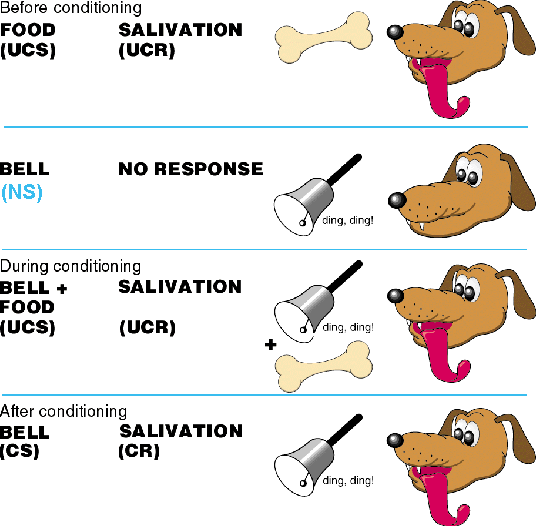
This was shown by Ivan Pavlov with dogs.
An unconditioned stimulus (UCS) elicits a specific, unconditioned response (UCR).
If the UCS is associated with a neutral stimulus (NS), the latter may become a conditioned stimulus (CS) and elicit the same, conditioned response (CR), in the absence of the UCS.
Advertisers often use classical conditioning to associate their products (NS) with a desirable stimulus (UCS).